Memory from the perspective of the CPU Memory with Virtual Addresses and Memory Brokerage Virtual Memory usually implies Demand Paging The kernel may or may not use Virtual Memory address translation.
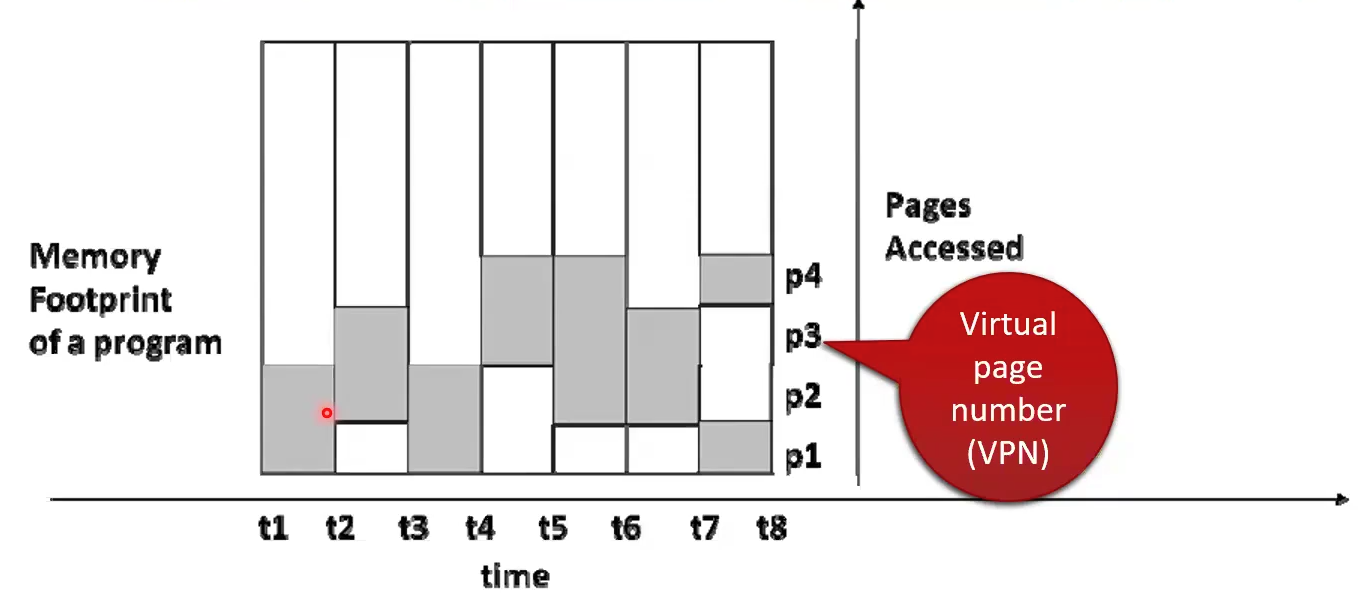
Working Set
The set of Pages referenced at a given time.
Segmented Virtual Memory
Segmented Virtual Memory
- Segmentation is a system allowing a process’s memory space to be subdivided into chunks of memory each associated with some aspect of the overall program
- Segments can be different sizes
- Segmentation isn’t transparent like Paging, but it is much more aware of program and data structures
- Segmentation came before paging, but it is visible to the ISA, so it doesn’t work as a retrofit to ISAs with contiguous memory models. IBM couldn’t use it in the 1970s because they had already committed during the 1960s to upper/lower bound register memory management and a contiguous address space.
- Hence, we have paging that could be transparently slipped under existing memory management. Other manufacturers followed suit because paging didn’t require their applications to be aware of paging.
- Typical Segments
- Code segments
- Global Data
- Heap
- Stack
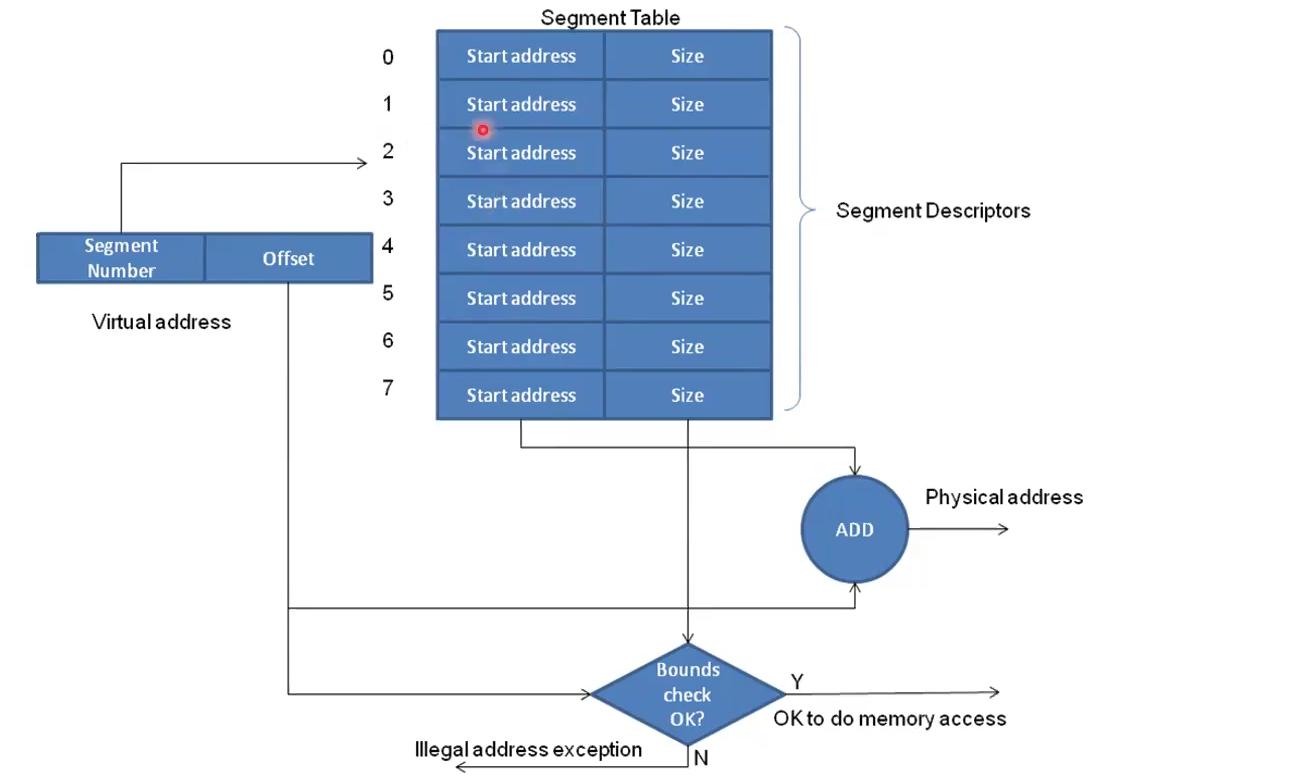
Each segment has a number and a size Each segment starts at its own address 0 and goes up to its size - 1 Segment addressing is almost like page addressing
Segmenation has no Internal Fragmentation but has External Fragmentation---opposite of Paging
Link to originalThis is basically Base + Limit but for segmented virtual memory It is different because of the size in the segment table and the need to compare the bounds