A medium through which a Signal propogates that alters its amplitude, frequency, or phase characteristics, in order to pass desired characteristics while attenuating undesired ones.
Basic Filter Types
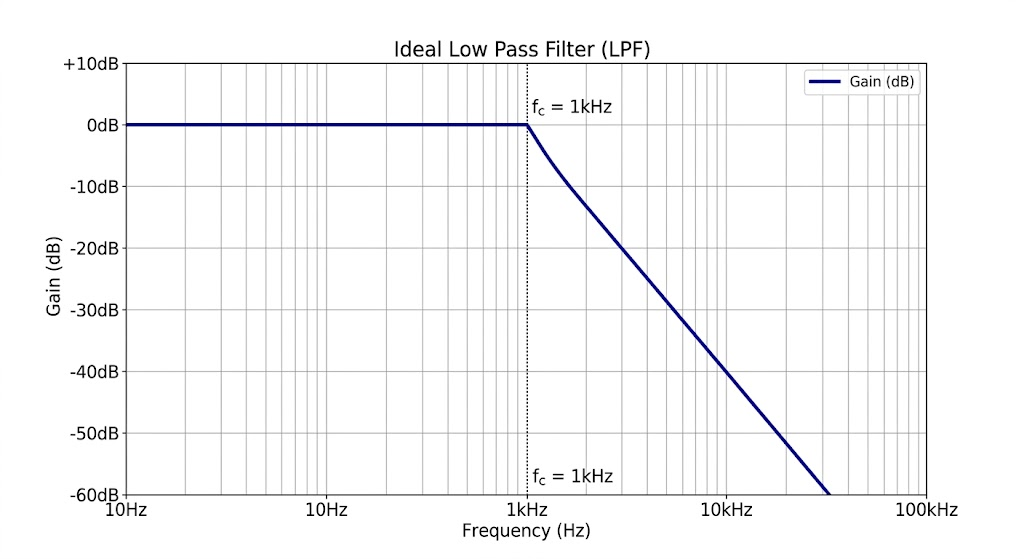
Low-Pass Filter
Low-Pass Filter
A Filter that only passes low frequencies.
Link to original
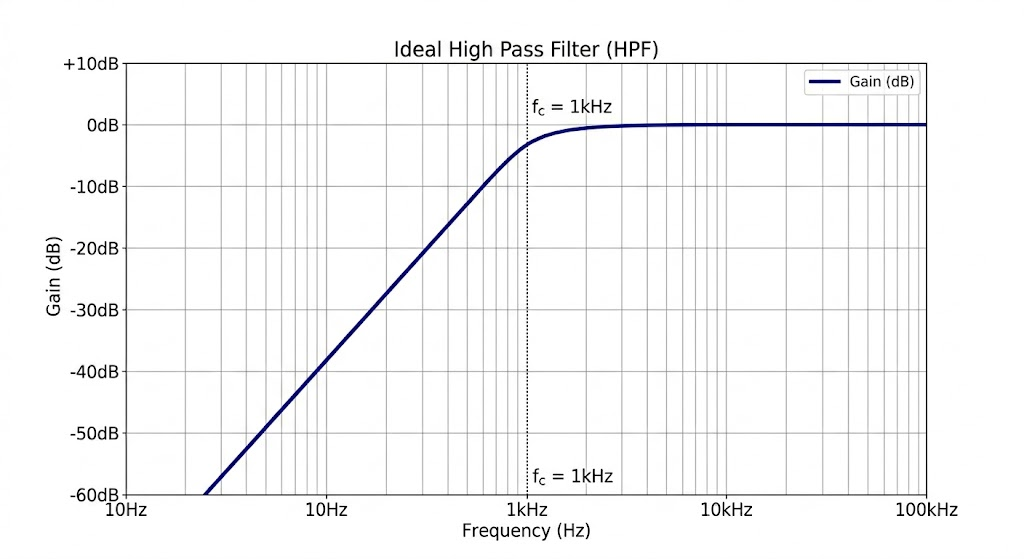
High-Pass Filter
High-Pass Filter
A Filter that only passes highest frequencies.
Link to original
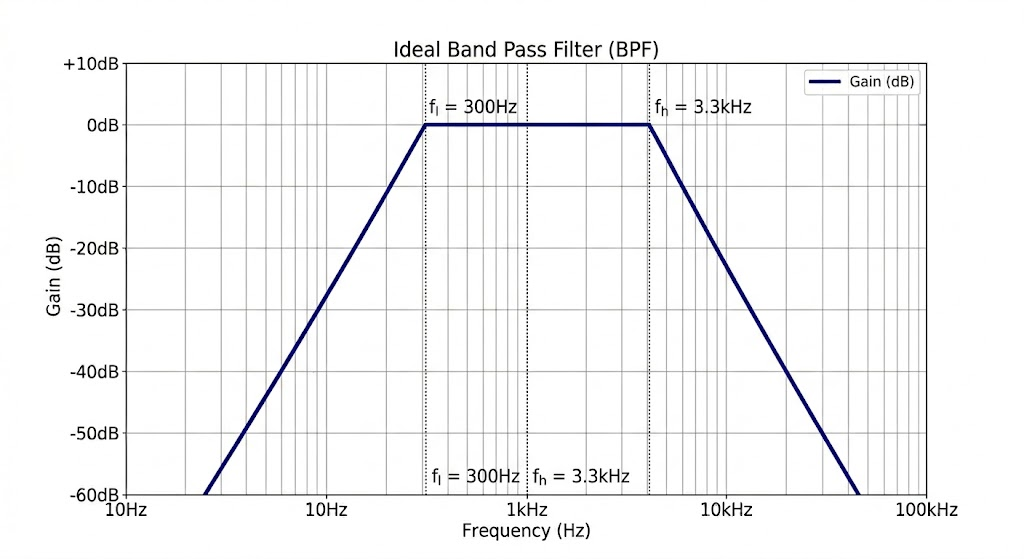
Band-Pass Filter
Band-Pass Filter
A Filter that only passes a specific Frequency Band
Link to original
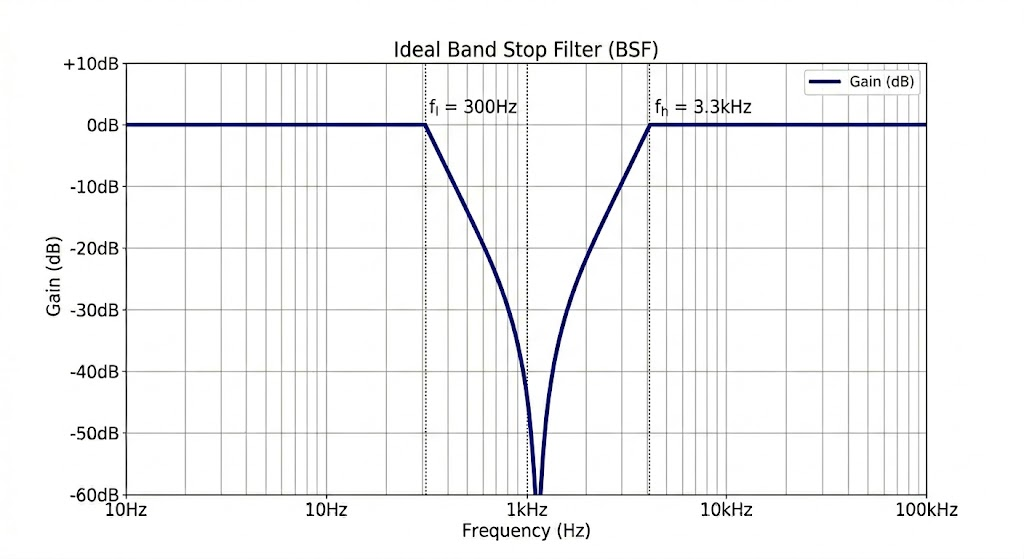
Band-Stop Filter
Band-Stop Filter
A Filter that passes every frequency except for a specific Frequency Band
Link to original
Impulse Response Filters
Impulse Response
Impulse Response
In Digital Signal Processing, Impulse Response is the output of a system when it is subjected to an Impulse.
For example, the impulse response of a reverb filter would continuously fade the volume from the impulse over time. An echo filter would periodically repeat the impulse, while fading the volume over time. A gain filter would have no temporal effect like the aforementioned.
is used to denote the impulse response of a system where
Impulse response is important in DSP because if a system in a Linear Time-Invariant System, then knowing means you know everything about the system, where is the system.
Link to original
Finite Impulse Response Filter
Finite Impulse Response Filter
A Finite Impulse Response Filter is a Linear Time-Invariant System Filter whose Impulse Response eventually becomes zero, or in other words, the duration of response to the Impulse Signal is finite. This property is due to such filters being Feed-Forward.
- Because FIR Filters are Feed-Forward, they are massively more parallel and belong in CUDA algorithms on the GPU, whereas IIR Filter is inherently iterative and thus is better suited for the CPU
Z Transform
- See Z Transform
Impulse Response
Link to original
- See Impulse Response
Infinite Impulse Response Filter
Infinite Impulse Response Filter
An Infinite Impulse Response Filter is a Linear Time-Invariant System Filter whose Impulse Response never becomes zero, or in other words, the duration of response to the Impulse Signal is infinite. This property is due to such filters being recursively defined, i.e. having Feedback.
- Because IIR Filters are Feed-Back
Z Transform
- See Z Transform
Divergence
For a system with poles
- Asymptotically Stable
- Marginally Stable and all poles with are Algebraic Multiplicity of 1
- Unstable or with Algebraic Multiplicity greater than 1
Impulse Response
Link to original
- See Impulse Response