An atom consists of a nucleus of protons and generally neutrons, surrounded by an electromagnetically bound swarm of electrons.
Multi-Electron Atom
When multiple electrons () are present, the wave function will be a function of each electron’s position
and the potential energy will be
where is the nuclear charge
Because are quantized, so is
Electronic Configuration
- Ground State
- Hydrogen →
- Helium →
- Helium has two electrons in 1s state
- Lithium →
- Lithium has two electrons in the 1s state, and another in the 2s state
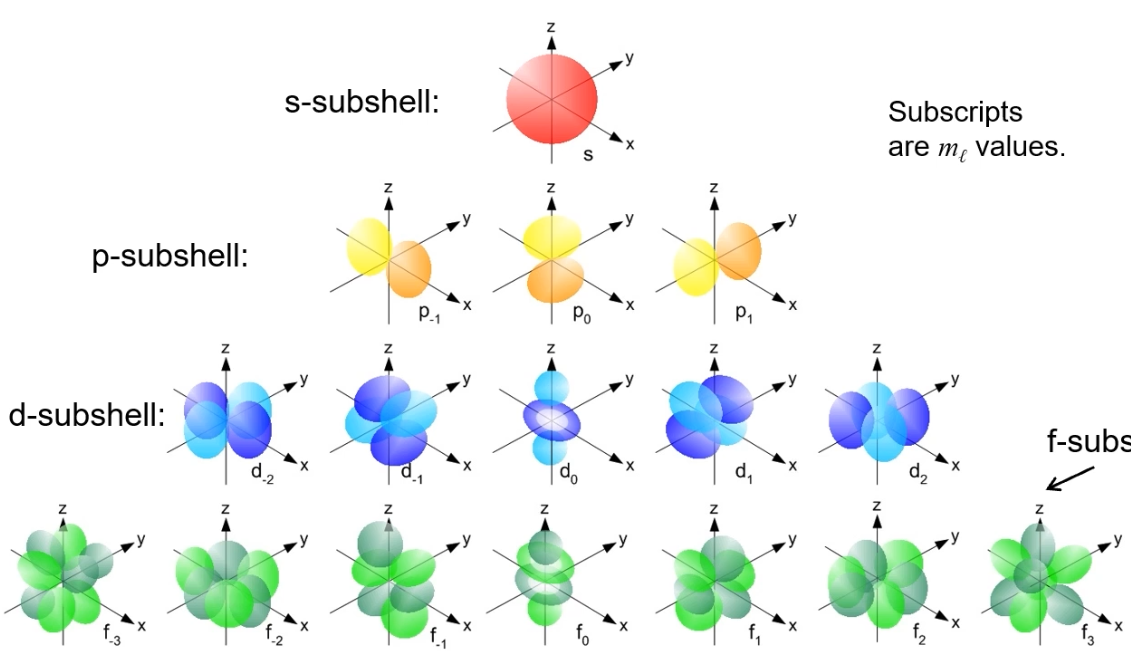
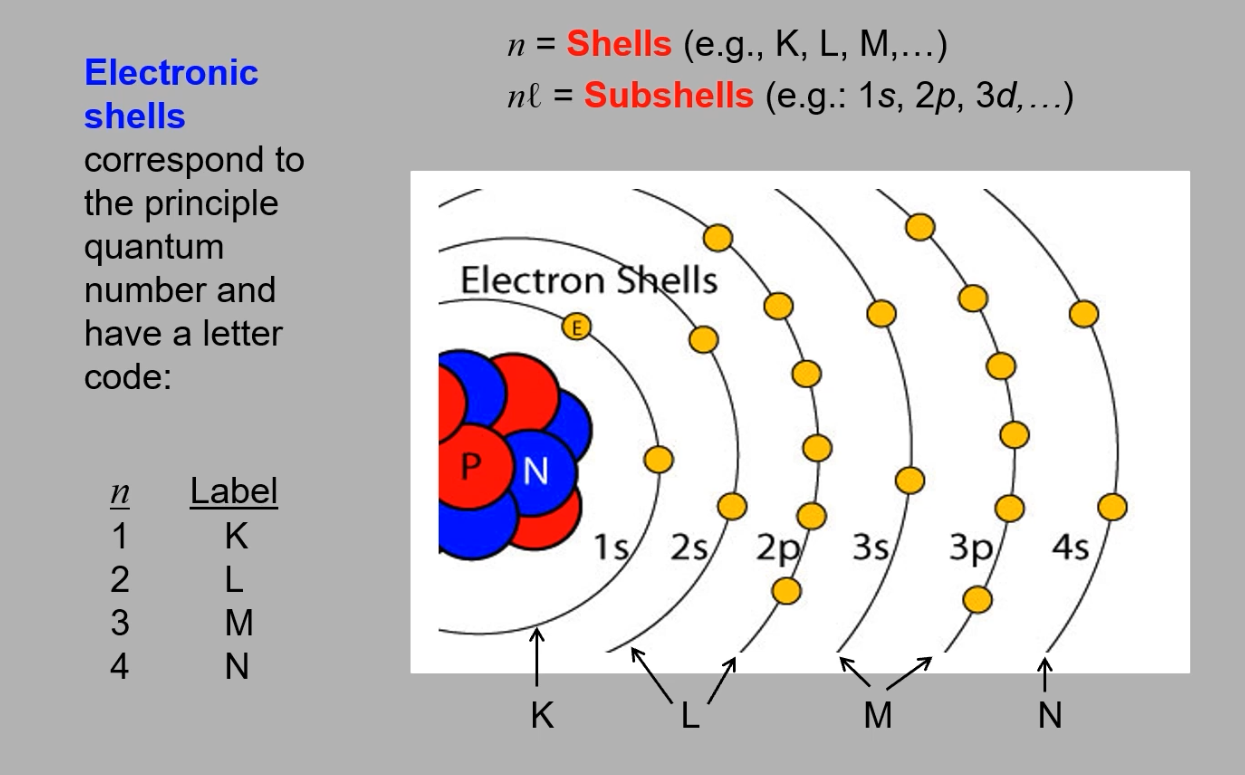
Electronic Shells and Subshells
See NL Shorthand for meaning of lowercase letters
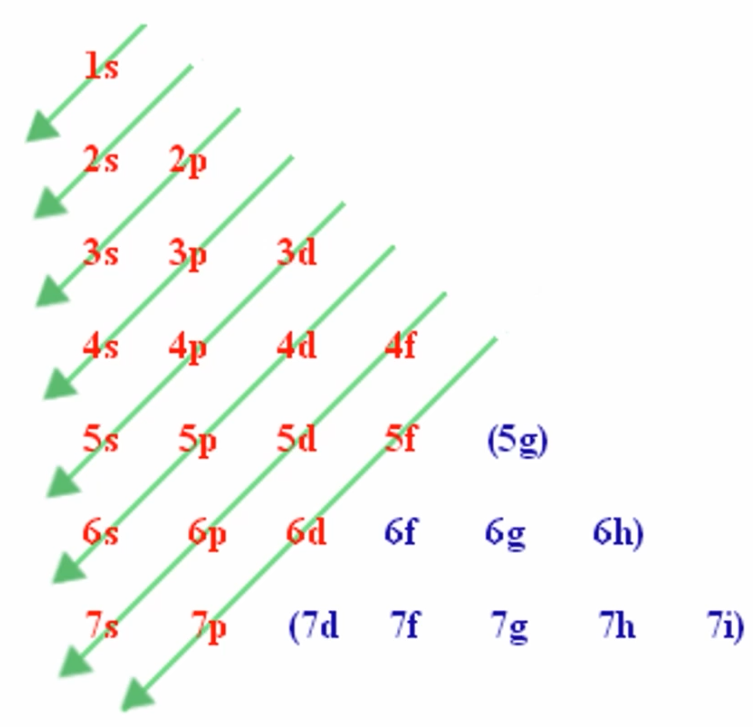
Subshell Filling Order
Electrons filling according to their energy, which does not strictly follow the value of .
Closed Shells and Subshells
- Spherically symmetric (closed-shell) electron probability distributions have the most compact electron distributions and so are also the most stable and most difficult to ionize.
- Accordingly, electrons with one more electron than a closed shell have the opposite properties, i.e. it is volatile, easy to ionize, and easy to bond with in a Molecule
Spin-Orbit Coupling
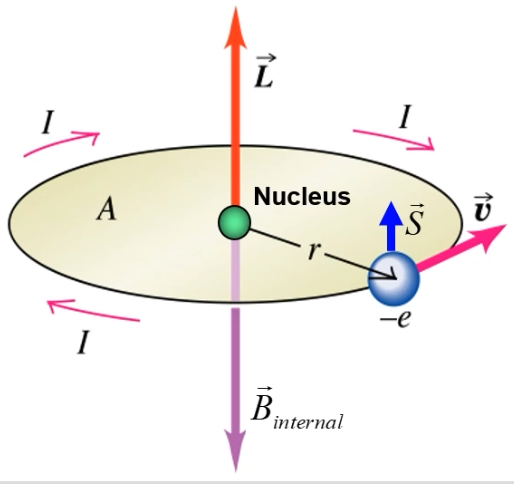 The orbit of the electron produces a magnetic field
But the electron spin also prdocuts a magnetic field proptional to the spin. The spin’s potential energy in the magnetic field of the electron orbit is
Parallel → Repulsion Antiparallel → Attraction This energy dependence on the interaction of the electrons’ spins and orbital angular momenta is called spin-orbit coupling. It yields fine structure in the energy levels and spectrum.
Hyperfine Structure
The nucleus can also have spin: The total angular momentum including nuclear spin is designated by