A digital signal is the result of Quantizing the values of the codomain of a Discrete-Time Signal, creating a new signal where both the Domain and Codomain are discrete. It is typically can be denoted as , where is the function of the signal, and is the index. It can also be denoted as or to distinguish it from its discrete-time counterpart, and to show that it has been quantized.
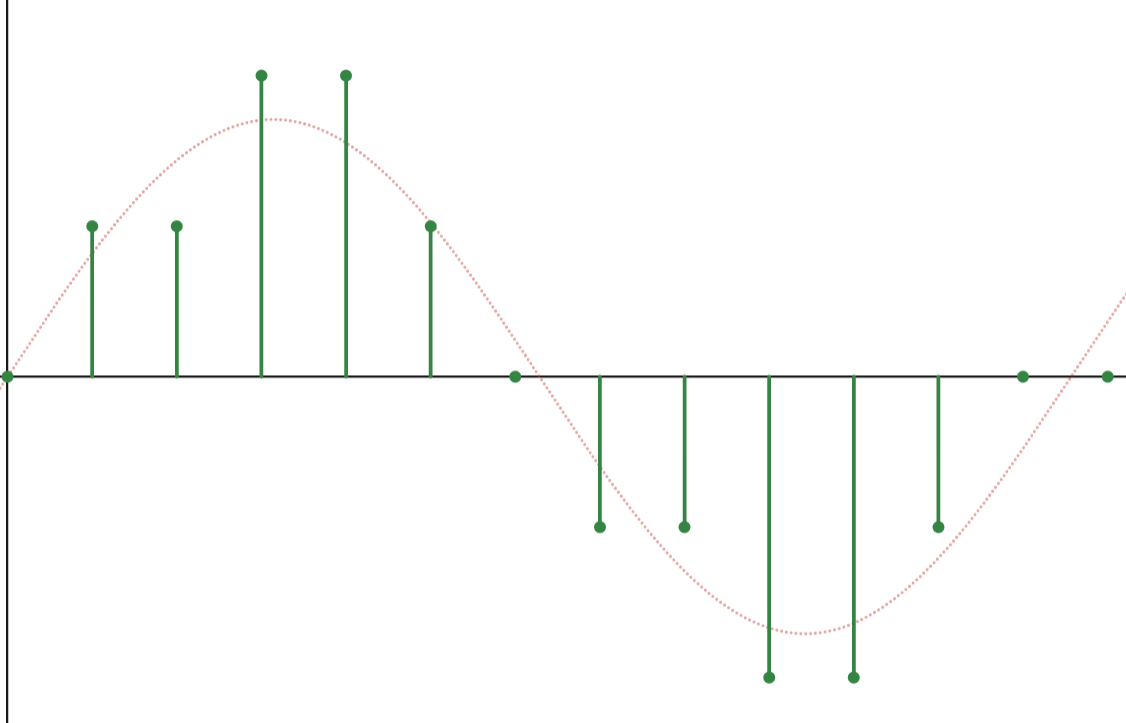
An example of a digital signal would be the final steps of the Analog-to-Digital Converter before it sends the final digital signal to the computer; it has to represent that signal in binary. Any means of representing all continuous values with finite digits of precision will lead to loss, so regardless of if you choose IEEE 754 Doubles, or some kind of integer, you will be performing some level Quantization to the signal. The result is a signal with both discrete time and amplitude.